Probably a good fit
- You are building or renovating and can plan the wiring.
- 24 V DC and a bus cable are available or planned.
- Home Assistant, openHAB or FHEM runs locally in your home.
- You want to use sensor data and define automation yourself.
Prototype in development
OWL
Warm light and local sensing over 24 V and Modbus. No cloud account.
Share feedbackNot a shop. Open development project.
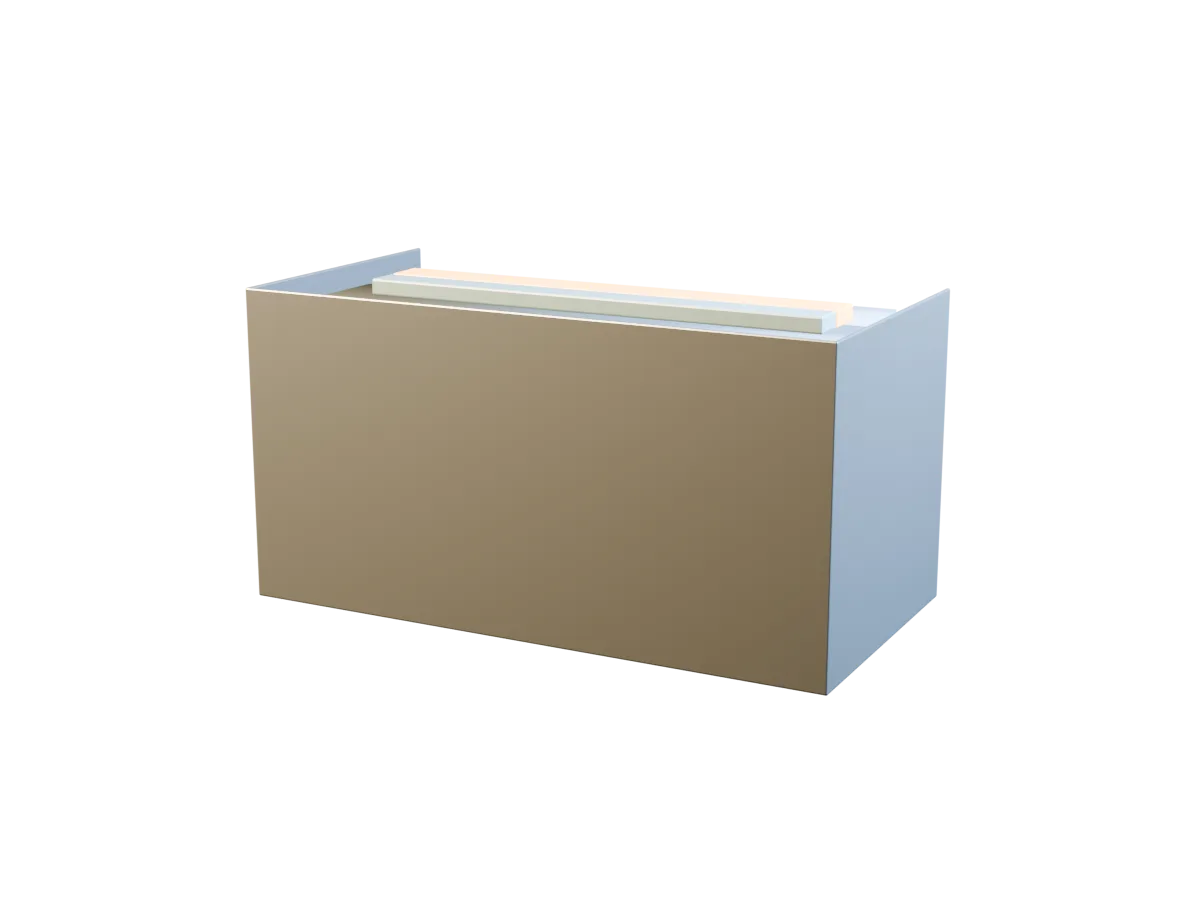
Drag the model to rotate the view
Interactive design model · Lighting effect simulated
Interactive design model
01 · Light
Try the warm base light and addressable RGB effects directly on the model.
Visualization only – luminous flux and beam shape will be measured on the prototype.
02 · Sensing
Radar, PIR, ambient light, outdoor temperature and the status LED are available to your local controller.
silent visualization · no sound is played
Sensor positions follow the current design · ranges have not yet been validated in the enclosure.
03 · Open & independent
24 V DC and RS485 / Modbus connect OWL by cable directly to your local home controller.
Connector position is still conceptual · open hardware and firmware are planned, not yet published.
04 · Construction
Faceplate, printed enclosure, electronics and light modules remain traceable as separate assemblies.
Select a component to keep its description in focus.
Some internal parts are dimensionally simplified in the web model.
Before you read on
OWL is deliberately not a Wi-Fi light for a quick swap at an existing 230 V wall point.
Development status
The design is well advanced. Physical validation starts with the first circuit boards and enclosure parts.
The idea behind it
Your home should not depend on a vendor cloud. Components can take on different jobs; local control, documented interfaces and replaceable assemblies are what matter.
DirectControl through local wiring and systems.
TraceableNo hidden path between a sensor and an action.
ReplaceableTechnology can change without rebuilding everything.
Planned to be openHardware and firmware are intended to be documented and accessible; timing and scope are not decided.
AI where it has a real purpose – local, transparent and switchable.
Planned platform
OWL should not become another isolated island. Six planned modules show how lighting, switching and sensing could work together under your control.
Concept · in development
Eight potential-free relay outputs for lighting, sockets, heating and motors. Designed for up to 16 A at 250 V AC, with planned current measurement per channel.
8 × switch · potential-free · up to 250 V ACConcept · in development
Eight outputs for digitally addressable RGB and RGBW LED strips from 5–24 V. Per-pixel effects, segments and animations run through WLED and Ethernet.
8 × pixel LED · WLED · EthernetConcept · in development
Sixteen PWM channels for smooth dimming of conventional LED strips and low-voltage lights from 12–32 V. Channels can be used individually or grouped as RGB and RGBW.
16 × dim · 12–32 V DC · ModbusConcept · in development
Four MOSFET trailing-edge dimmers for dimmable 230 V LED lamps. Planned as a solid-state solution for up to 150 W per channel.
4 × dim · 230 V AC · solid stateConcept · name pending
A locally connected door interface with bell, camera, intercom and display. Form factor and exact scope are still open.
Entrance · locally connectedConcept · base architecture
One central ceiling sensor per room: 60 GHz radar detects presence even without visible movement. A fisheye camera and four microphones enable local AI communication plus speech and image processing on your own home server. CO₂, VOC/NOx, particulate matter, temperature, humidity, pressure, ambient light and PIR capture air quality and room climate. Connected through PoE/Ethernet and Modbus, without a cloud; camera and microphones are intended to have hardware shut-offs.
Presence · room climate · local AIThese modules preview the direction of the system; they are not announcements of price or timing.
Open development
Your answers help me understand the requirements of real installations.
No fine print
No. OWL is a prototype in development. Your feedback is non-binding.
The planned version uses centrally supplied 24 V DC. The power supply, wiring and installation depend on the individual installation.
The plan calls for a central 24 V DC supply and a separate hard-wired RS485/Modbus connection. Depending on cable length, power and voltage drop, a suitable mains-rated or low-voltage cable may be appropriate for power. A shielded twisted pair is planned for the bus. Existing KNX cable should be usable where possible, but that has not yet been approved through testing. The corresponding Modbus module for the distribution board is still a concept. Final cable types, conductor sizes and maximum lengths will follow practical tests. Planning and installation must be carried out by a qualified electrician.
Usually not without additional wiring. OWL is aimed first at new-build and renovation projects.
That is a central development goal. It still has to be demonstrated on the physical prototype.
Open licenses are prepared. The timing and scope of publication have not been decided.
Only after bring-up, light, temperature and sealing tests, and a clear compliance path. There is no date yet.